
How to Keep the Cost of a Composite Door Down (Without Buying a Poor One)
A new composite door is one of those jobs where spending a little less in the right places makes sense, and spending less in the wrong places comes back to haunt you.
We speak to a lot of homeowners who want a proper door — something secure, warm and well made — but do not want to pay for extras they will barely notice. That is a perfectly reasonable place to start. The aim of this guide is not to talk you into the cheapest door on the internet. It is to show you where the money actually goes, which choices quietly add cost, and which ones are worth keeping.
At CDS Doors we manufacture in our own factory in Birkenhead. That already removes a layer of middlemen. Even so, two doors from the same workshop can come out at quite different prices depending on the glass, the colour and how complicated the opening is. Knowing that before you start designing is the easiest way to stay in control.
First Start Shopping Smarter, not Cheaper!
There is a difference between a well-made door at a sensible price and a door that has been stripped back until it is barely worth fitting.
A composite door should still feel solid, lock properly and keep the weather out for decades. If the saving comes from a weak core, a poor lock or a rushed installation, you have not saved anything. You have just delayed the next bill.
So, the rule we use with customers is simple: trim the specification where it does not affect performance. Do not trim the quality of the door itself, and do not cut corners on the fitting.
Where the extra money usually goes
Most of the jump in price is not mysterious. It tends to come from a handful of choices.
Decorative or leaded glass costs more than a solid panel or a simple glazed design. Special-order colours and dual-colour finishes cost more than standard stock colours. A colour-matched frame costs more than a white frame. Side panels, toplights and non-standard sizes add materials and fitting time. Ornate styles take more work than a clean, simple design.
None of those things are bad. Plenty of our customers choose them and are delighted. They are just the places to look first if you want to keep the quote tighter.
Recent Installs From The CDS Team
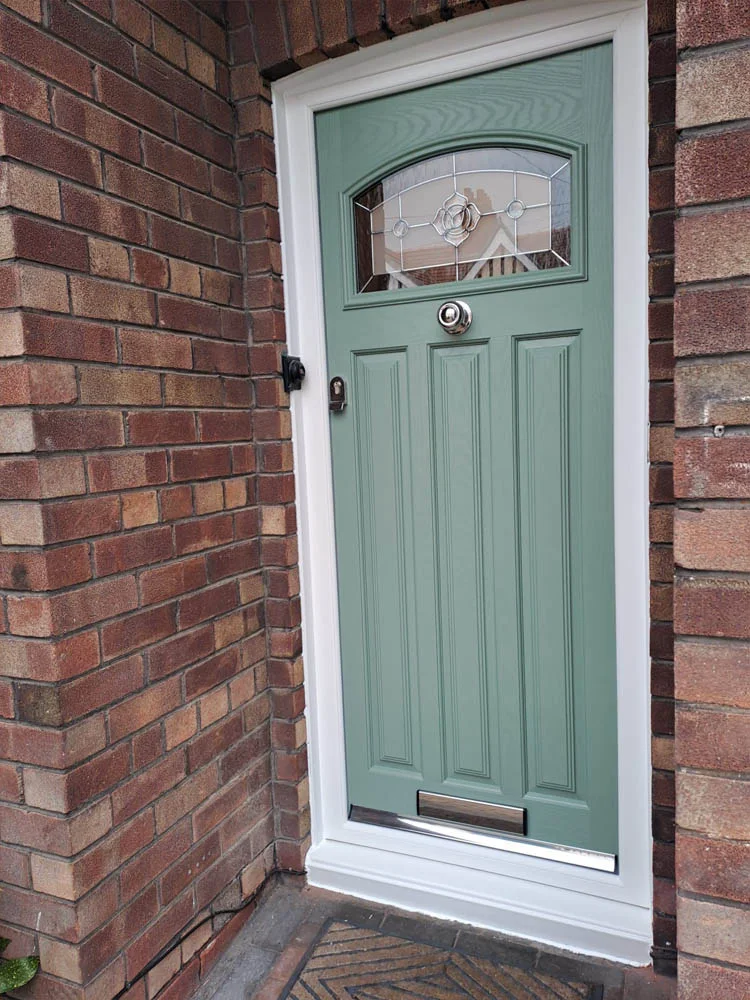
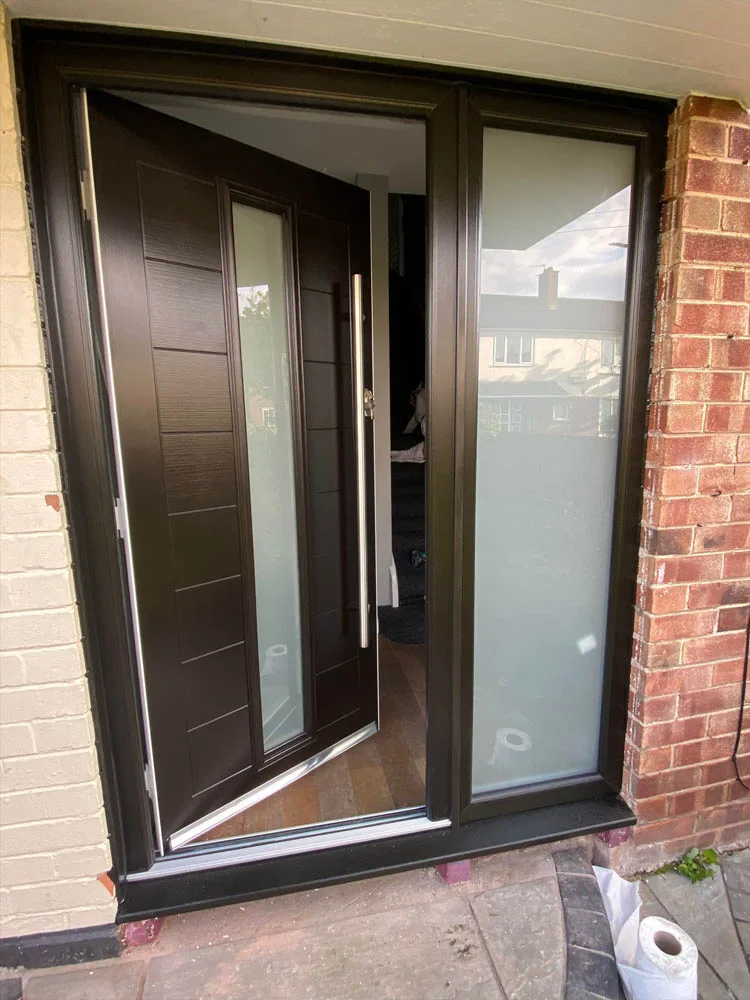
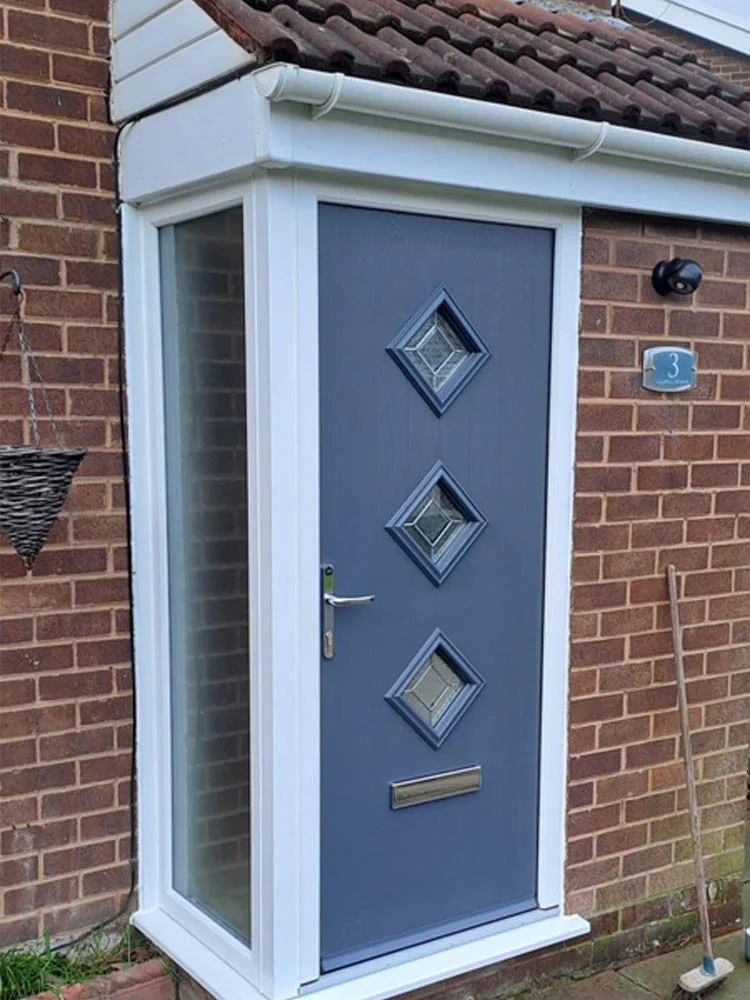
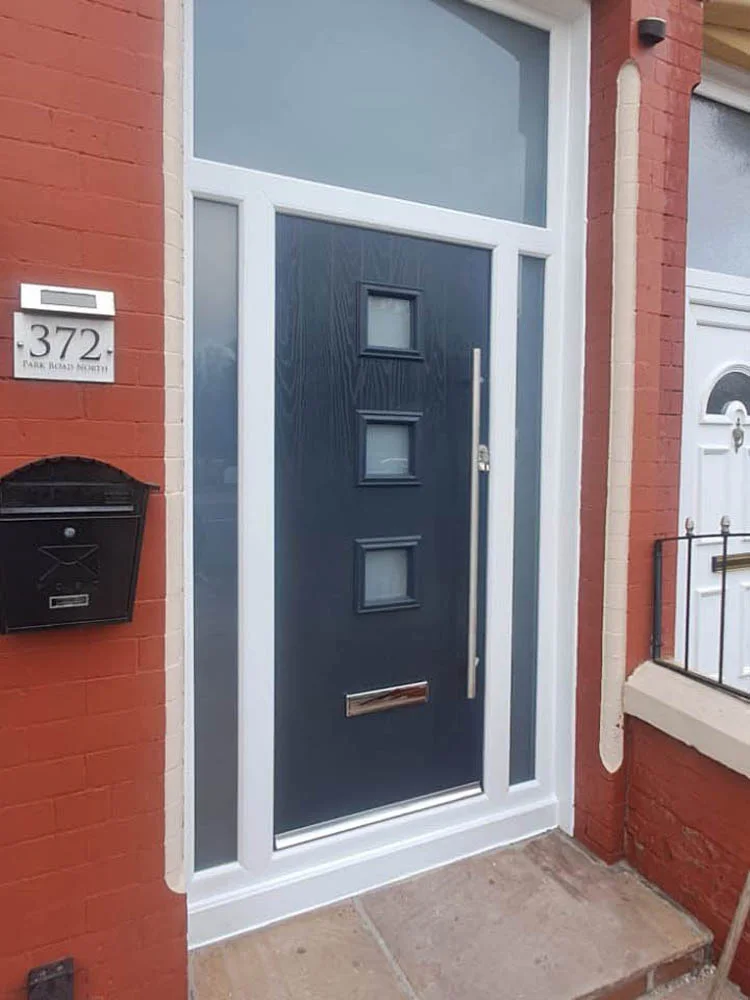
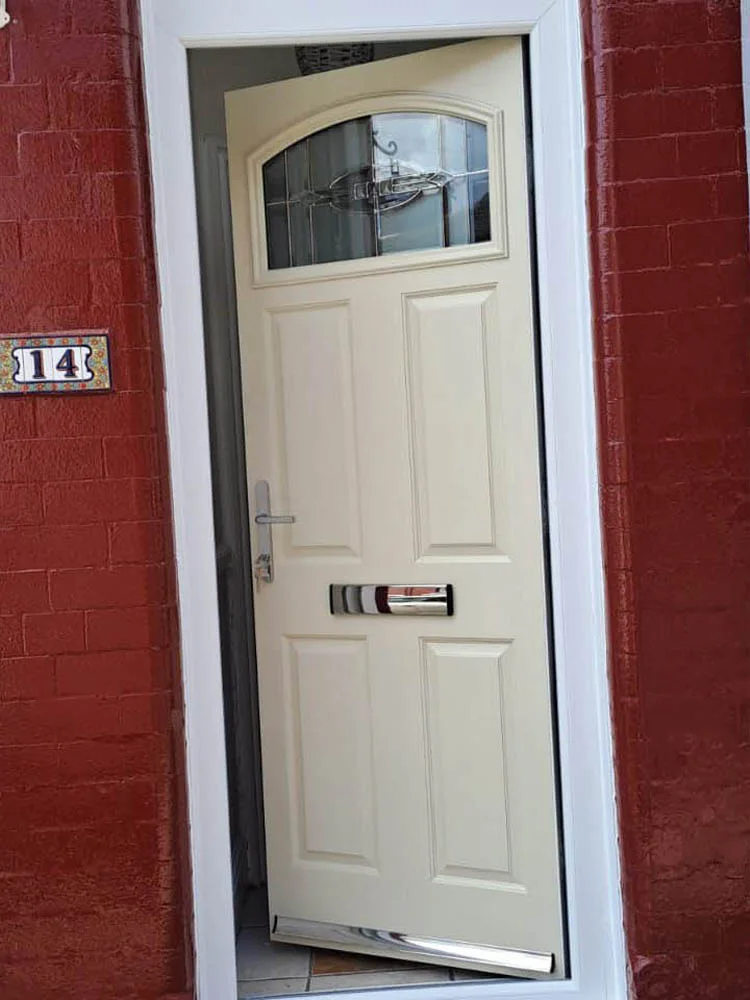
Ways to keep the price down without lowering the quality
Choose a simpler style
You do not need a highly detailed door for it to look good. Our smoother, cleaner designs — such as those in our Block styles range — tend to sit at a more comfortable price than heavily decorated styles. They still use the same core principles: a proper composite construction, a durable finish and a secure locking system.
If you like the look of a Trafalgar or Deco door, that is fine. Just know that the extra detailing is one of the reasons the price moves up.
Go solid, or keep the glazing simple
Glass is one of the first things that lifts a quote. A solid door, or a door with a modest, straightforward glazed panel, is usually kinder on the budget than decorative, leaded or triple-glazed designs.
That does not mean the door is lower quality. It means you are not paying for a glass pattern you may not need. If your hallway is already bright, or you prefer privacy from the street, a solid door can be the smarter choice anyway.
Stick to a standard colour
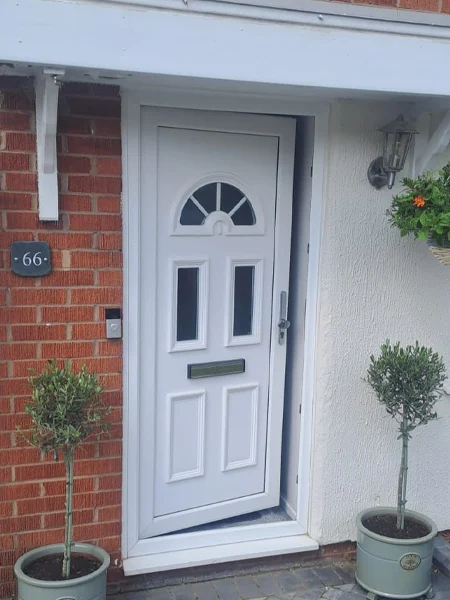
White remains one of the most cost-effective finishes, and it suits a huge number of homes. Other standard stock colours are usually more affordable than special-order shades.
A white door on a white or cream house can look crisp and well judged. You do not have to choose white if you dislike it — but if the budget is the main concern, starting with a standard colour is one of the easiest wins.
Keep the frame simple
A colour-matched frame looks lovely. It also adds cost. Leaving the frame white, and putting the colour on the door itself, is a common way to keep the specification sensible without the finished job looking cheap.
Fit a single door if the opening allows it
Side panels and toplights can look superb, and on a wide opening they are often the right answer. They also add several hundred pounds because you are buying more frame, more glass and more fitting time.
If a single door fills the space properly, that is usually the better value route. If the opening is clearly too wide, do not squeeze a skinny door into it just to save money. That is one of those savings that shows from the street.
Stay close to a standard size
Made-to-measure is what we do, and it is the right way to get a door that actually fits. That said, the further you move from a typical opening, the more the price can climb. If your current door is a fairly standard size and the frame is sound, you are already in a good position.
What we would not skip
This is the part that matters most.
Do not save money on the lock. A multi-point locking system is one of the reasons people choose composite doors in the first place. At CDS we fit Yale multi-point locks as standard because security is not the place to bargain.
Do not save money on the fit. A good door in a poor frame, or a door that has not been set and sealed properly, will draught, stick or look wrong. Professional installation protects the performance of the door and the guarantee that comes with it.
Do not buy on price alone from a supplier you cannot speak to afterwards. A door is in your house every day. If something needs looking at in two years’ time, you want a local manufacturer, not a listing that has disappeared.
Those three things — lock, fit and who stands behind the door — are what separate a sensible purchase from a poor one.
A better saving than stripping the specification
Before you take glass out or drop to the plainest colour, check whether the home might qualify for help under ECO4. Eligible households with a low EPC rating and certain benefits may get support towards an energy-efficient door.
That can reduce the cost far more than swapping a glazed panel for a solid one. It is not available to everyone, and it is not financial advice, but it is worth checking before you assume you have to strip the design back. We have a separate guide to ECO4 if you want to read more.
Buying direct from a manufacturer helps too. Because we make the doors ourselves in Birkenhead, you are not paying a long chain of mark-ups on top of the product.
What a money-conscious spec can still look like
A practical, good-quality starting point for many homes is:
- a simple, well-made composite door in a standard colour such as white
- straightforward or no decorative glazing
- a white frame
- a single door in a standard opening
- a proper multi-point lock
- professional supply and fit
That is still a CDS door. It is still manufactured here, still finished to our usual standard, and still backed by our structural guarantee. You have just chosen not to pay for extras you do not need.
From there, you can add glass, a richer colour or a side panel later in the designer if the quote still has room. It is much easier to add a feature you love than to take cost out after you have fallen for a fully loaded design.
How to see the difference for yourself
The Door Designer is useful here. Build the door you first imagined, then try a version with simpler glass and a standard colour. You will see straight away which choices move the price and which ones barely change the look.
If you would rather talk it through, send us a photo of the current entrance. We would rather help you spend on the right things than sell you a specification that stretches the budget for no good reason.
FAQ
Is a cheaper specification a worse door?
Not if the core construction, lock and installation stay the same. The price usually moves because of glass, colour, size and extras, not because the door suddenly becomes a different product.
Is a white composite door lower quality?
No. White is simply a standard, widely used finish. It is often one of the more affordable colour choices.
Does no glass mean a poorer door?
No. A solid door can be an excellent choice for privacy, warmth and value. Glass is a design choice, not a quality test.
Should I fit the door myself to save money?
We would not recommend it for most homeowners. A poor fit can undo the performance of a good door and may affect the guarantee. The fitting is one of the last places to look for a saving.
Can I still have a CDS door on a tighter budget?
Yes. A simpler style, a standard colour and a single door in a standard opening is a common way to keep the quote sensible without stepping down in quality.
Are the prices in this article fixed?
No. Any prices mentioned elsewhere on our site are guides only. Your quotation depends on the opening, the specification and the installation requirements.
Could ECO4 help instead of cutting the specification?
Possibly, if the property and household meet the scheme rules. Check eligibility separately, and do not treat this as financial advice.
If you want a door that looks right and lasts, start with the quality and then decide which extras you actually need. That is the most reliable way to keep the cost down — and still be happy every time you put the key in the lock.