
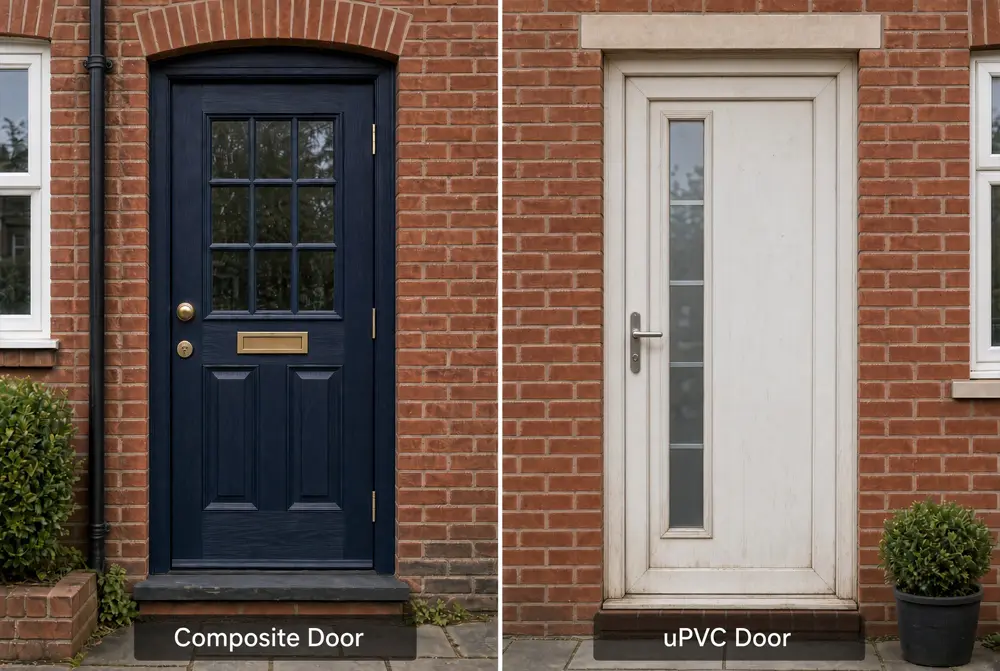
Composite Doors vs uPVC Doors in Liverpool: Which Is Better in 2026?
If you’re looking at new composite doors in Liverpool, there’s a good chance you’ve also been comparing them with uPVC. Both are popular, both are low-maintenance, and both can look smart. So which one is actually the better choice for a Liverpool home in 2026?
The honest answer depends on what matters most to you — upfront cost, long-term performance, security, or how the door looks from the street. This guide compares the two side by side so you can decide with a clear picture of the differences.
Quick comparison at a glance
| Feature | Composite door | uPVC door |
| Typical fitted cost (2026) | £1,200 – £2,200+ | £500 – £1,200 |
| Thickness | Usually 44–48mm | Around 28mm |
| Thermal performance | Often 1.0–1.4 W/m²K (CDS as low as 0.8) | Typically 1.4–1.8 W/m²K |
| Security | Strong solid core + multi-point lock | Multi-point lock on a thinner panel |
| Lifespan | 30–35 years | 20–25 years |
| Maintenance | Wipe clean | Wipe clean |
| Look and feel | Solid, realistic woodgrain or smooth finishes | Lighter, more plastic appearance |
| Best for | Main front entrance | Back doors, side doors, tighter budgets |
These are realistic 2026 ranges based on current UK market data and what Liverpool homeowners typically pay for a professionally supplied and fitted door. Final prices always depend on size, glass, colour and installation.
Cost: where the biggest difference shows
uPVC is almost always cheaper to buy and fit. A straightforward uPVC front door in Liverpool can often be supplied and fitted for between £500 and £1,200. A composite door from a reputable manufacturer is more commonly in the £1,200 to £2,200 range for a standard single door, with higher figures for side panels, special colours or premium glazing.
At CDS Doors we manufacture in our own Birkenhead factory, which helps keep our composite prices competitive. You can see realistic Liverpool figures in our 2026 cost guide Many households also qualify for help through the ECO4 scheme, which can reduce the cost of an energy-efficient composite door.
The higher upfront cost of composite is the main reason some people choose uPVC. The question is whether that saving holds up over 20–30 years.
Recent Installs From The CDS Team
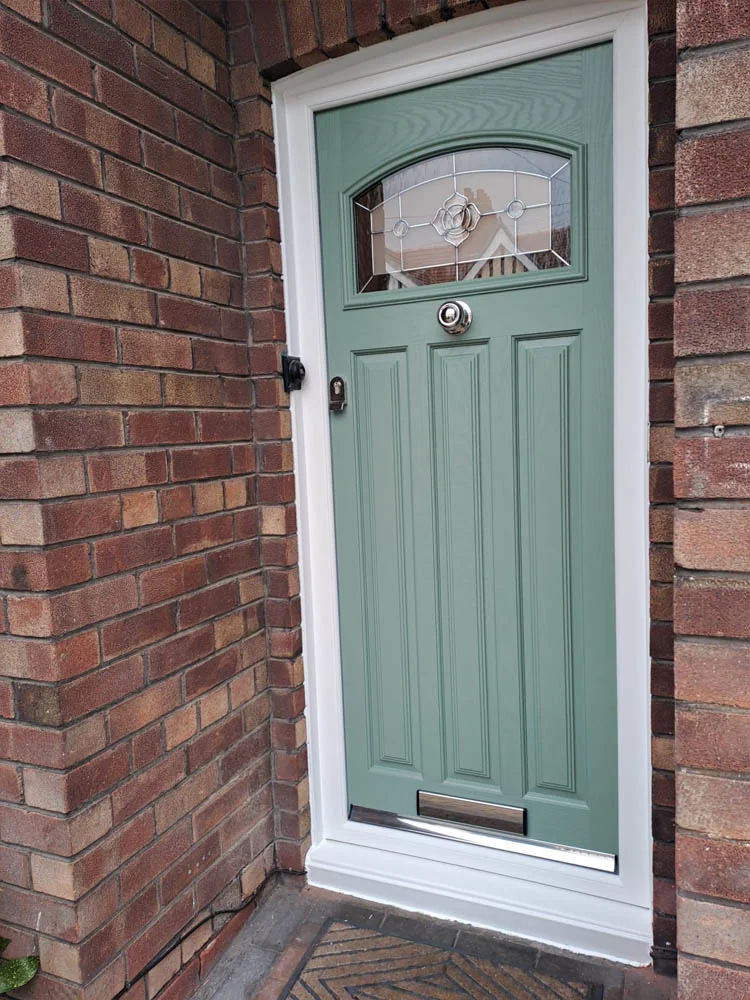
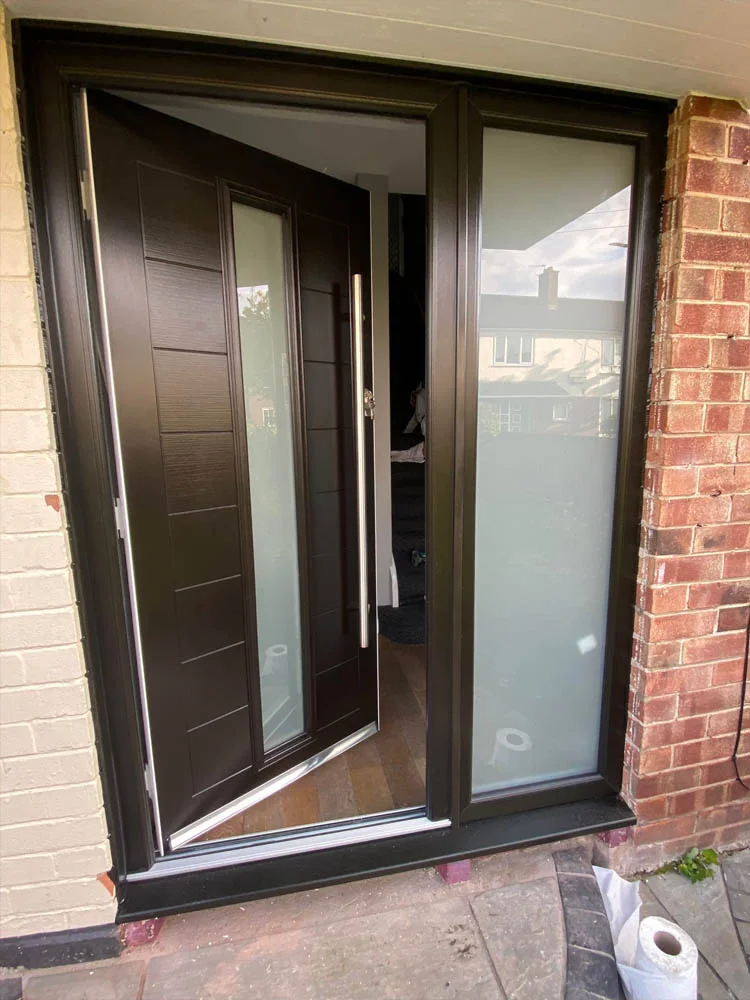
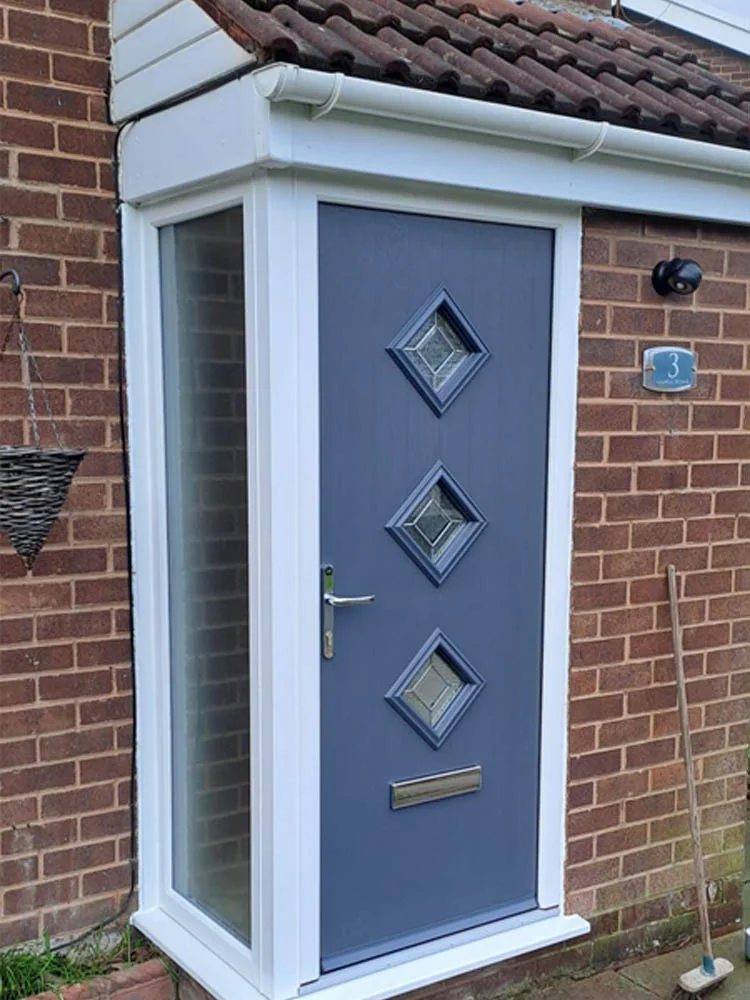
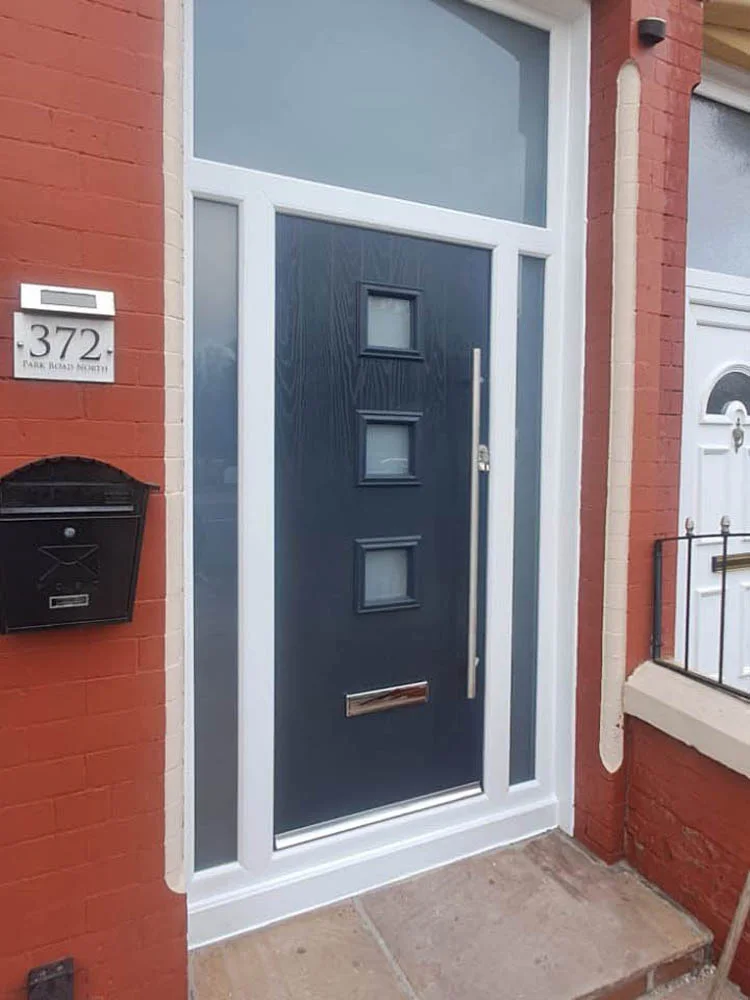
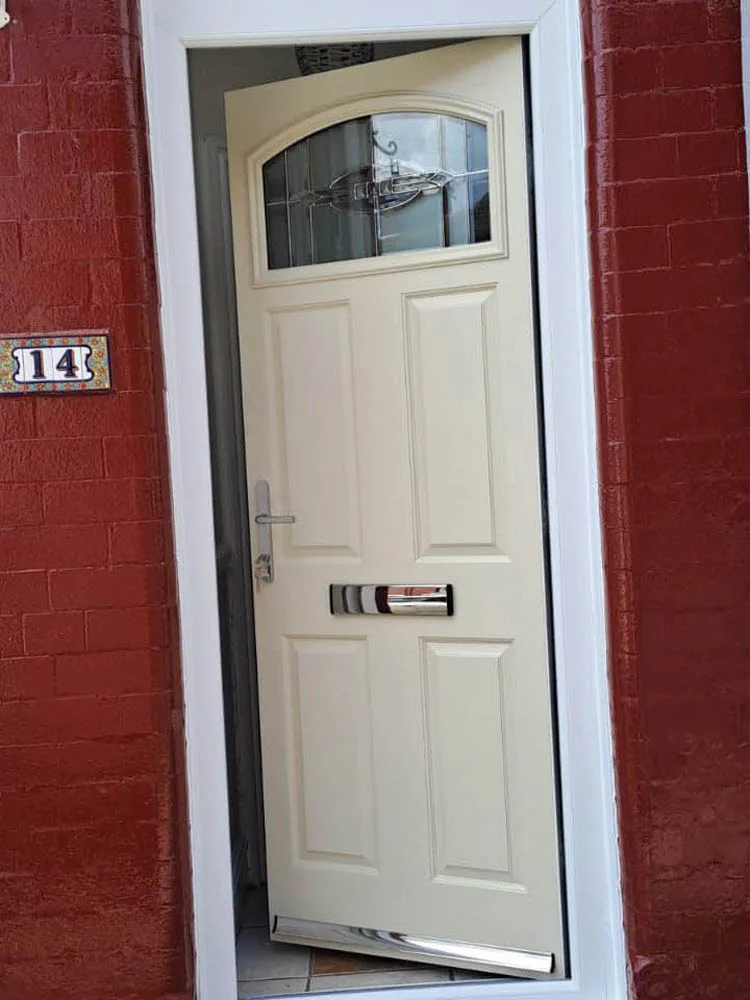
Thermal performance and energy bills
Both materials are far better than an old timber door, but composite generally has the edge.
A typical modern composite door achieves a U-value between 1.0 and 1.4 W/m²K. CDS composite doors can reach as low as 0.8 W/m²K thanks to the high-density foam core. Most uPVC doors sit around 1.4–1.8 W/m²K. In practice this means a composite door loses less heat, which can make a noticeable difference on a cold Liverpool evening and may help keep heating bills a little lower over time.
If energy efficiency is a priority, the composite option is the stronger choice. You can read more about the wider benefits in our guide on how composite doors improve your home.
Security and build quality
This is one of the clearest differences. A composite door is thicker (typically 44–48mm) with a solid foam or timber core and a tough GRP skin. A standard uPVC door panel is thinner, around 28mm, and relies more on internal steel reinforcement.
Both can be fitted with multi-point locks and can meet PAS 24 security standards when specified correctly. However, the solid core of a composite door makes it more resistant to forced entry. CDS doors come with Yale multi-point locking as standard and are built to meet UK security requirements.
For most Liverpool front doors — especially on streets with higher footfall or where the entrance faces the pavement — the extra strength of composite is worthwhile.
Appearance and kerb appeal
Composite doors offer more realistic woodgrain finishes and a wider range of traditional and contemporary styles. They tend to look more substantial and closer to a timber door, which suits many of Liverpool’s terraced and semi-detached homes.
uPVC doors have improved a lot, and woodgrain foils are available, but they still often have a lighter, more plastic look and feel. If kerb appeal is important, composite usually wins. You can explore styles that work well on Liverpool houses in our colours and styles guide, or try different options in the Door Designer.
Maintenance and lifespan
Both doors are low maintenance compared with timber — a wipe with soapy water is normally enough. Composite has a longer expected life (30–35 years versus 20–25 years for most uPVC). Dark-coloured uPVC can also be more prone to movement or fading on a south-facing elevation, while quality GRP composite skins are more stable.
Our maintenance guide for Liverpool and Wirral homeowners covers the simple care that keeps a composite door looking good for decades.
Which is better for Liverpool homes?
Choose a Composite Door if:
– It’s your main front entrance and you want the best combination of security, insulation and looks.
– You plan to stay in the house for many years.
– Kerb appeal matters and you want something that feels solid.
– You want the strongest long-term performance in Liverpool’s damp, windy climate.
Choose uPVC if:
– Budget is the main constraint and you need a functional door for less money.
– It’s a back door, side door or utility entrance where appearance is less important.
– You’re happy to replace it sooner.
For the majority of Liverpool front doors we fit, composite is the better long-term choice. The extra cost is usually recovered through better durability, lower maintenance and improved energy performance, and many homeowners simply prefer the look and feel.
If you’re trying to keep the price sensible without dropping to a lower-quality product, our guide on how to keep the cost of a composite door down shows practical ways to do it. Side panels can also be added where the opening is wide enough — see whether they’re worth it in our side panels guide.
FAQ: Composite vs uPVC
Are composite doors better than uPVC in Liverpool?
For most front doors, yes. They offer better security, slightly better insulation, a longer lifespan and stronger kerb appeal. uPVC remains a sensible, lower-cost option for secondary doors or tighter budgets.
How much more expensive is a composite door?
Typically, 40–60% more than a comparable uPVC door when both are supplied and fitted. In Liverpool a standard composite door is commonly £1,200–£2,200+, while uPVC is often £500–£1,200.
Do composite doors last longer?
Yes. A quality composite door is usually expected to last 30–35 years with minimal maintenance, compared with 20–25 years for most uPVC doors.
Are CDS composite doors more secure than uPVC?
The solid core and thicker construction give composite doors an advantage in resisting forced entry. CDS doors are fitted with Yale multi-point locks and can meet PAS 24 standards.
Can I still get a good deal on a composite door?
Yes. Choosing a simpler style, a standard colour and avoiding unnecessary extras keeps the price down without compromising the core quality. Manufacturing locally in Birkenhead also helps.
Is uPVC ever the better choice?
Yes — for back doors, side entrances, or when the budget is limited and you need a functional, low-maintenance door quickly.
If you’d like to see how a composite door would look on your Liverpool home, try the Door Designer or get in touch for a straightforward quotation. We’re based in Birkenhead and regularly fit across Liverpool, so we can give you an honest view of which option suits your opening and budget.